Furnace Repair Help for Your Home
Request a furnace repair estimate
When your furnace stops working, the house cools fast. Think of a furnace like a lunch cooler in reverse: it only keeps you comfortable when every part is doing its small job. If one part fails, the whole system can go quiet.
Partsbobby Heating & Air is a referral service. We do not repair furnaces. We explain what may be happening in plain words, suggest photos and notes to gather, and connect you with independent local providers in our network. The provider does the work, gives you a written quote, and answers your questions. You decide what happens next, and there is no obligation to hire anyone.
Smell Gas? Safety Comes First
If you smell gas, which often smells like rotten eggs, do not look for the cause yourself. Do not flip switches, light anything or use a phone near the smell. Leave the house, then contact your gas utility or emergency services from outside.
Think of it like a smoke alarm. You do not investigate first. You get out first.
Other Warning Signs to Take Seriously
- A headache, dizziness or nausea when the heat runs
- A carbon monoxide alarm that sounds
- Soot or scorch marks near the furnace
If an alarm sounds, go outside and get help. Do not wait to see if it stops.
Photograph It First
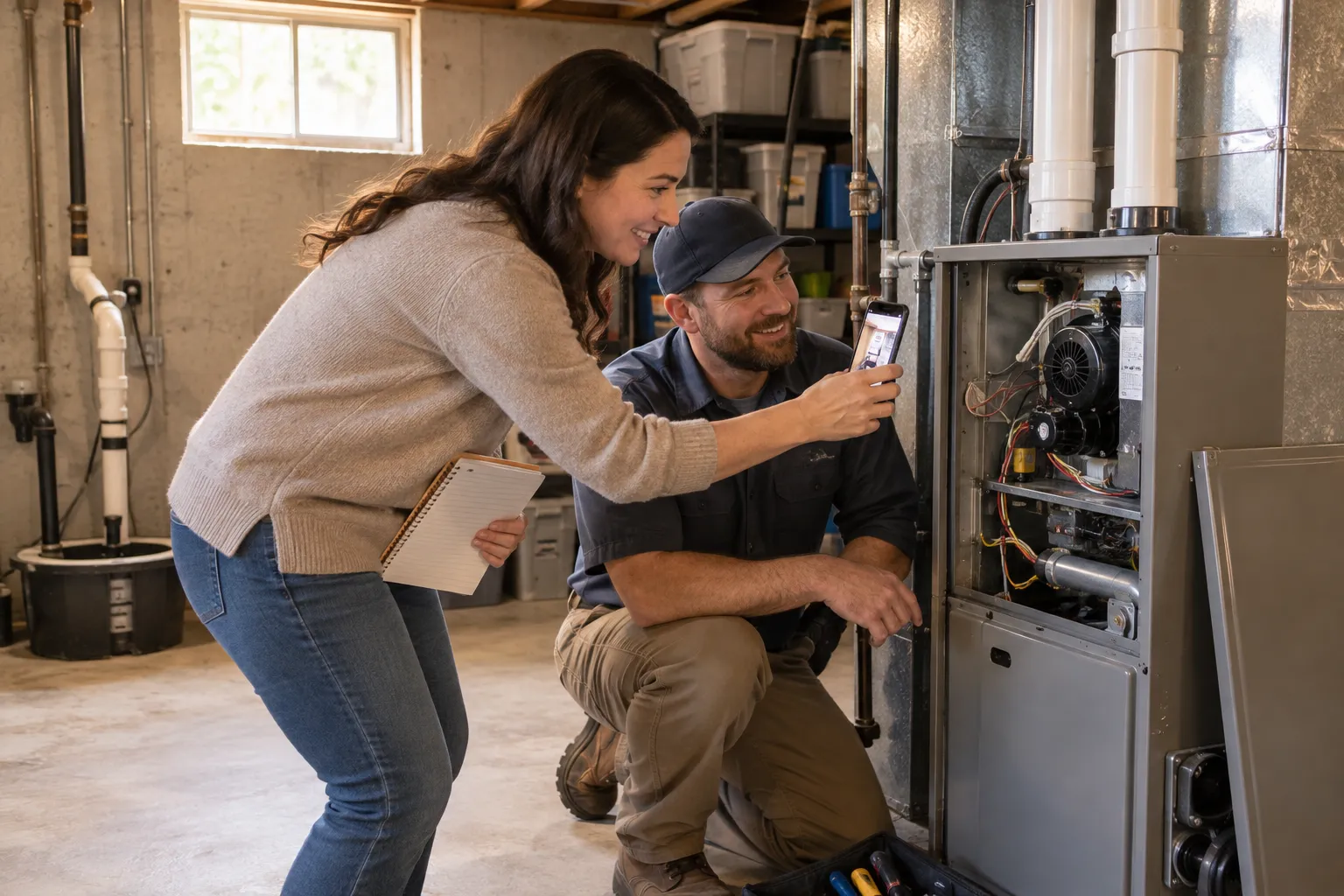
Before anyone touches anything, take a few pictures. Notes before nerves. A calm record helps you later.
- The furnace as a whole, from a few steps back
- The label with the model and serial number
- Any error light, flashing code or odd marks
- The thermostat screen and its setting
Write down the date, what you heard, and what the house felt like. A short note works fine.
Quick Checks Before You Request a Visit
Some problems are simple. Checking them is like making sure a lamp is plugged in before blaming the bulb.
Check the Thermostat
Make sure it is set to heat and the temperature is above the room reading. Fresh batteries fix more problems than people expect.
Check the Power and the Filter
Look at the breaker and the furnace switch, which often looks like a light switch on a nearby wall. A clogged filter can also make a furnace shut itself off, so look at yours.
Check the Pilot or Igniter
If your furnace is older, a pilot light may have gone out. If you are unsure how to relight it, leave it for a provider.
If a quick check does not help, stop there. Do not open panels.
Common Signs Your Furnace Needs Repair
A furnace often hints at trouble before it quits. It is like a car that starts making a new noise.
- No heat at all: the blower may run, but the air stays cold.
- Short cycling: it starts, stops, and starts again.
- Loud sounds: banging, squealing or grinding.
- Uneven rooms: some rooms stay chilly.
- Rising bills: the system works harder for the same warmth.
Write down when each one happens. Patterns help a provider narrow things down.
Why Cold Weather Makes Things Worse
Deep frost pushes a furnace hard. After a cool, damp summer and a hard winter, parts can simply be tired. Many frame homes and bungalows built decades ago also have older ductwork, so heat can leak before it reaches the rooms.
If your furnace is in a basement, look for damp floors or standing water nearby and photograph it. Spring flooding and sump pump trouble can affect equipment on the floor.
What Happens During a Furnace Repair Visit
A visit usually follows a simple path, like a doctor checking symptoms before suggesting a plan.
The Conversation
The provider asks what you saw and heard. Your notes and photos save time here.
The Inspection
They look at the thermostat, igniter, burners, blower and safety controls. They may check airflow and the exhaust path.
The Written Quote
Ask for it written. A good quote lists the problem, the part, labor and any extra fees.
Common Furnace Repairs
- Igniter or pilot parts: these start the flame.
- Flame sensor cleaning or replacement: a small rod that confirms the flame is lit.
- Blower motor or capacitor: these move the warm air.
- Thermostat or control board: the signals and brain of the system.
- Draft or exhaust problems: the path that carries fumes outside.
Repair or Replace Your Furnace?
A repair is like patching a tire. Replacement is like buying a new one. The right choice depends on age, condition and price.
Many providers suggest looking at replacement when the furnace is old, repairs keep repeating, or a cracked heat exchanger is found. If you search for furnace replacement near me, ask providers to explain why they suggest it, and compare two written quotes.
Questions to Ask the Provider
- What do you think is causing the problem?
- Is the repair needed now, or can it wait safely?
- What does the quote include?
- Is the part new, and does it have a warranty?
- If the furnace is old, what would replacement involve?
Keep the answers with your photos. That folder is useful for any later conversation with your insurer. Some policies may cover sudden damage, so check your policy, and providers can often help document damage for a claim.
When Heating and Cooling Records Help
Keep invoices, filter dates and notes about your heating and cooling equipment in one place. Over time, that folder shows the system's story. It helps with HVAC service later and can make a future sale smoother.
What's Included
Fault Diagnosis
A provider checks the thermostat, igniter, burners and blower to find why your furnace stopped heating.
Part Repairs
Common fixes include igniters, flame sensors, capacitors and blower motors, depending on the problem.
Safety Checks
Providers often check the exhaust path and safety controls while they are there.
Written Quote
Ask for the problem, parts and labor written down so you can compare options and decide calmly.
Typical Furnace Repair Costs
Prices vary by home, furnace age, part and region. These are typical U.S. ranges only. Always ask for a written quote before you agree to any work.
| Item | Typical range | Notes |
|---|---|---|
| Diagnostic visit | $75 – $200 | Often applied to the repair at some companies |
| Igniter or pilot part | $150 – $450 | Depends on furnace type |
| Flame sensor | $100 – $350 | Cleaning costs less than replacing |
| Blower motor | $400 – $1,500 | Varies by motor type |
| Capacitor or relay | $150 – $400 | Small part, quick swap |
| Control board | $300 – $1,200 | Brand and model matter |
How It Works
Note the Problem
Write down what you saw and heard, and take photos of the furnace, label and thermostat.
Request an Estimate
Use the form or Request a callback to check provider availability in your area.
Talk It Through
A local provider asks questions, then inspects the furnace.
Review the Written Quote
Compare the details, ask questions, and decide what feels right.
Why Call Partsbobby Heating & Air
Explained in Plain Words
You get simple explanations of what may be wrong, so quotes and terms feel less confusing.
Records First
Photos and notes help you stay organized and speak clearly with providers.
Independent Providers
Work is done by local providers in our network, not by Partsbobby Heating & Air.
No Pressure
You choose whether to hire. There is no obligation to proceed.
Other Services
Need furnace repair in Independence?
Tell us what your AC or furnace is doing. Share a few photos if you have them, and we will point you to independent providers in our network.
Furnace Repair FAQ
Why is my furnace running but not heating the house?
The blower may be working while the burners are not lighting. Common causes include a dirty flame sensor, a bad igniter or a thermostat problem. A local provider can check which one it is.
How long does a furnace usually last?
Many furnaces last roughly 15 to 20 years with regular care. Age is only one factor. Repair history, safety findings and the quote all help you decide.
Will insurance pay for furnace repair?
It depends on your policy and the cause. Some policies may cover sudden damage, but wear and tear is often excluded. Check your policy and keep photos and quotes.
Reach a local provider
Tell us what your AC or furnace is doing. Share a few photos if you have them, and we will point you to independent providers in our network.
No obligation